
Andy Warhol (American, 1928-1987)
Fran Lebowitz, Unidentified Man, and Unidentified Woman, no date
8 x 10 in.
Gelatin silver print
Ladies and Gentlemen (Broadway), 1974
4.25 x 3.375 in.
Polaroid
Jon Gould and Victor Hugo on a Surfboard, no date
8 x 10 in.
Gelatin silver print
Gift of the Andy Warhol Photographic Legacy Project
(c) The Andy Warhol Foundation for the Visual Arts, Inc.
With striking Soup Cans and daring diptychs to his name, Andy Warhol is most commonly remembered in popular culture for his biggest, boldest works. Some of my personal favorites, however, are Warhol’s more seemingly simple endeavors: his gelatin silver prints and polaroids, three of which were on display in the Cunningham Theatre Center. These works were gifted to the Van Every/Smith Galleries by the Andy Warhol Photographic Legacy Project, which donated over 28,000 of Warhol’s photographs to over 180 university galleries and museums. The program sought to increase access to his photographs and help people greater understand the role the medium played in his life and general body of work, and these three works absolutely contribute to that, in my opinion.
Warhol, born in Pittsburg, Pennsylvania in 1928 to Russian immigrants, was perhaps the premiere Pop artist of the 20th century, and even his more subdued, casual shots, including Fran Lebowitz, Unidentified Woman, and Unidentified Man; Ladies and Gentlemen (Broadway); and Jon Gould and Victor Hugo on a Surfboard, are undoubtedly iconic once one takes a closer look at them and begins to understand the context in which they were created.
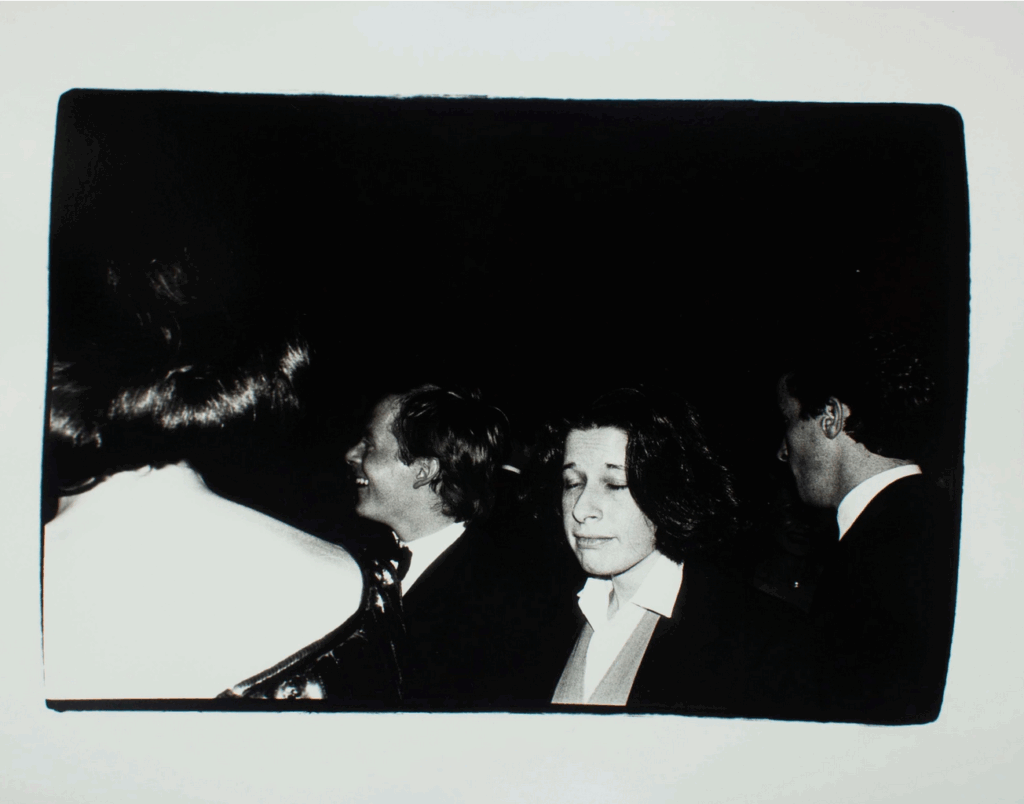
In Fran Lebowitz, Unidentified Woman, and Unidentified Man, lesbian feminist Fran Leibowitz can be seen seated with several unidentified people. A noted raconteur, Lebowitz is known for close associations with many queer artists of the 1970s and 1980s, including Robert Mapplethorpe, David Wojnarowicz, Warhol, and his superstar Candy Darling. In fact, her so-called “big break” came in the early 1970s when she was hired by Warhol himself to write a column for Interview Magazine, where her wit became a staple of the publication. In the candid photo, Lebowitz’ butch, almost Oscar-Wilde-esque style and attitude are on display, highlighting Warhol’s talent at capturing the essence of his subjects, especially those with whom he shared a common camp sensibility.
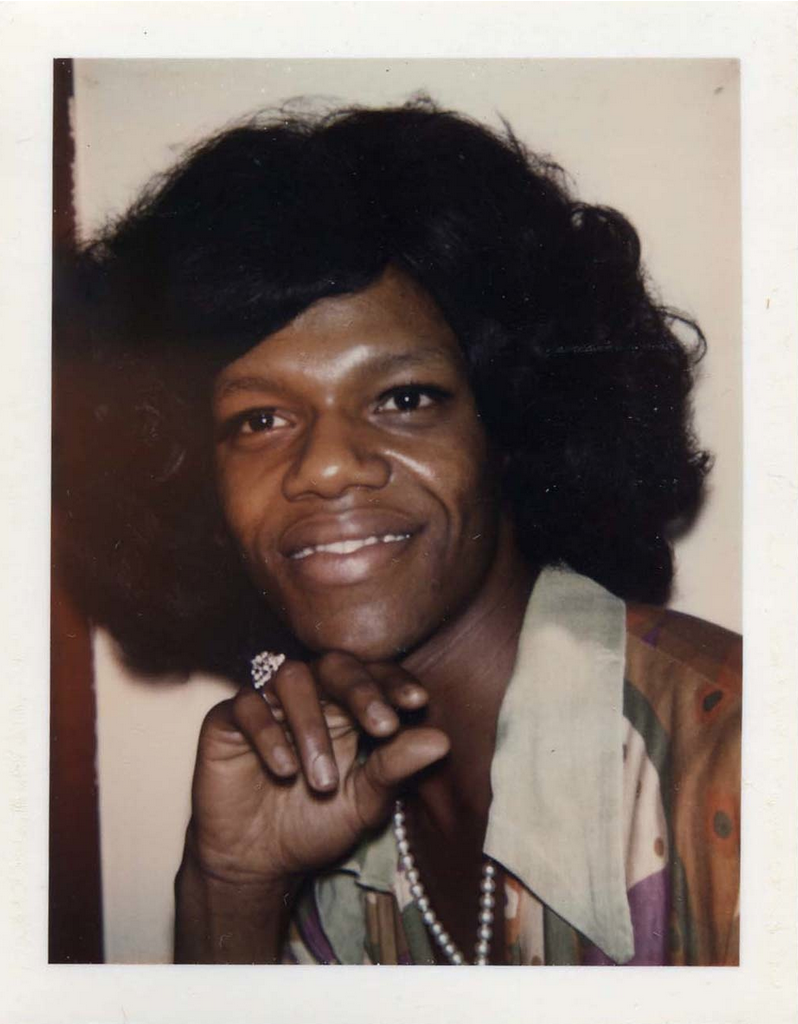
Ladies and Gentlemen, a lesser-celebrated but still interesting and important project of Warhol’s, highlights various drag queens and transsexuals in intimately casual and humanizing ways. The subjects of the photographs and screenprints, commissioned by Luciano Anselmino for $1,000,000 in 1974, were scouted primarily in a club in New York called the Gilded Grape, largely dominated by the black and Latin queer communities. Warhol shot these on his Polaroid Big Shot camera, the very same used to photograph mainstream Hollywood starlets, thus likening these ordinary queer people to those at the top of the pop culture social hierarchy and legitimizing their identities as fabulous, glamorous women. Even the title of the series, Ladies and Gentlemen, demonstrates the dual nature and complexity of the subjects’ gender expression, something that can clearly be seen in Ladies and Gentleman (Broadway), a work starring a drag queen named Broadway who, sadly, it seems, has been lost to time. Although we know little about who Broadway was, their coy smile and shining silver jewelry paint a picture of a person no different than you and I, something I can imagine Warhol was proud to have depicted.
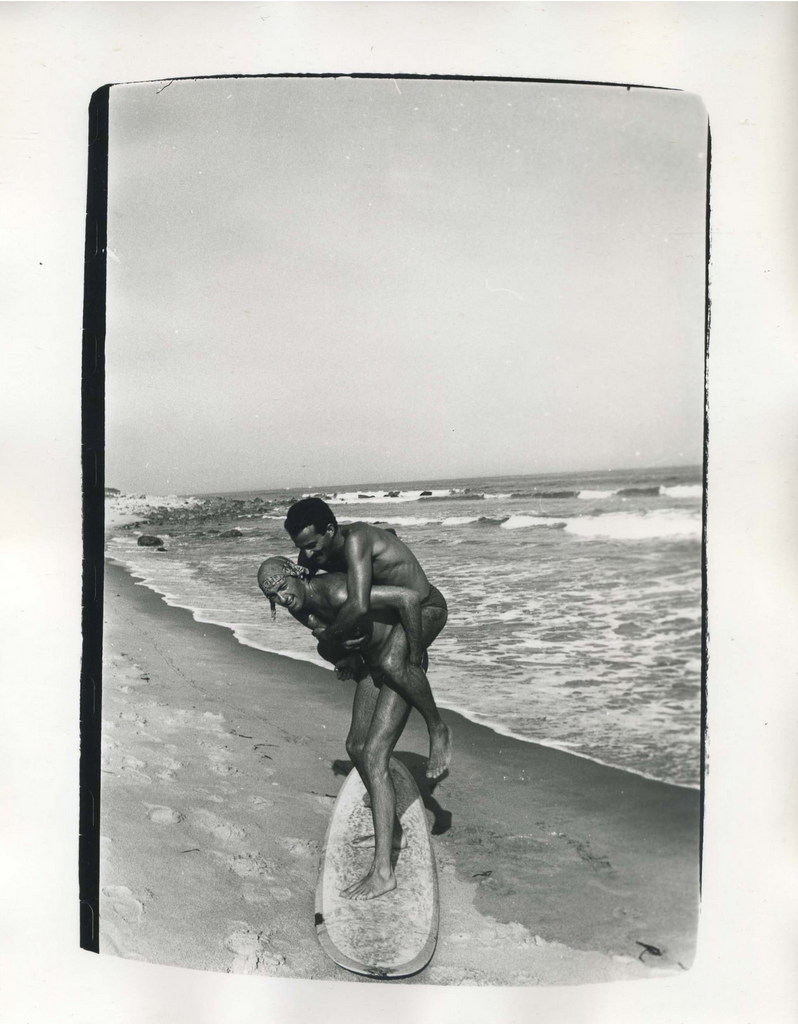
In Jon Gould and Victor Hugo on a Surfboard, the titular figures are captured candidly on a surfboard, Hugo atop Gould’s shoulders playfully, clinging to him. Gould, who was among Warhol’s most photographed subjects, is also thought to be Warhol’s final long term partner and lived with the artist for several years. Hugo was a window-dresser and the partner of Halston, a fashion designer who became internationally famous in the 1970s. The crashing waves move the viewer’s eye towards the figures, their limbs interlocking, as they smile and take in the beautiful simplicity of the moment they’re living in. The men in this photograph, while likely both queer, did not have a relationship with each other; rather, this piece highlights queer friendship in Warhol’s sphere, celebrating it with as much joy as is on the men’s faces.
– Katie Davis ’29