
Seen in Storage was such an exciting event because it gave students the opportunity to experience some of the remarkable works within our collection storage. Whenever I browse the racks, I feel incredibly privileged to study each piece up close. I am so glad that other students were able to discover this hidden part of our campus. Here is a sampling of the brief presentations by gallery interns.
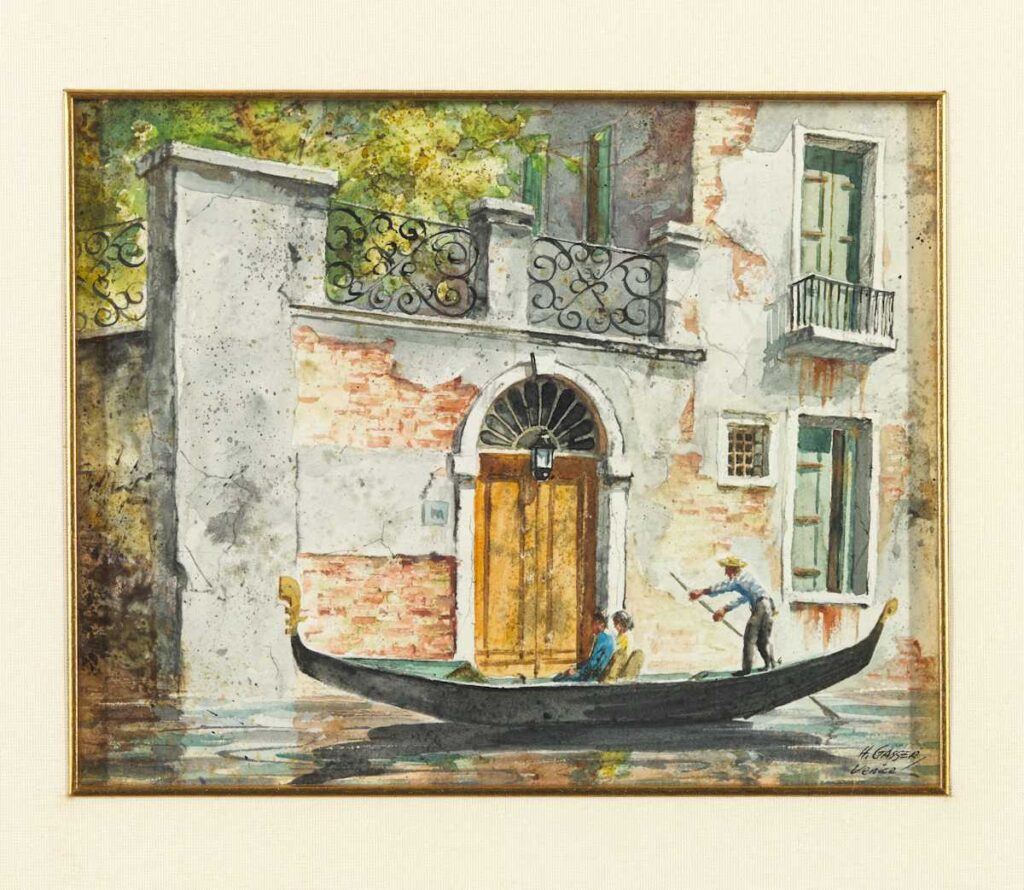
I chose Venetian Afternoon, a watercolor on paper by Henry Gasser. My grandfather recently published a book on Venice, and selecting this work allowed me to feel connected to him while also giving me something meaningful to share and discuss with him. The piece also reminded me of Joaquín Sorolla, a realist artist I studied during my semester abroad in Madrid. Both artists capture the rhythms of daily life while creating luminous, peaceful scenes that gently draw viewers into their worlds. – Sabrina Bonavita ’26
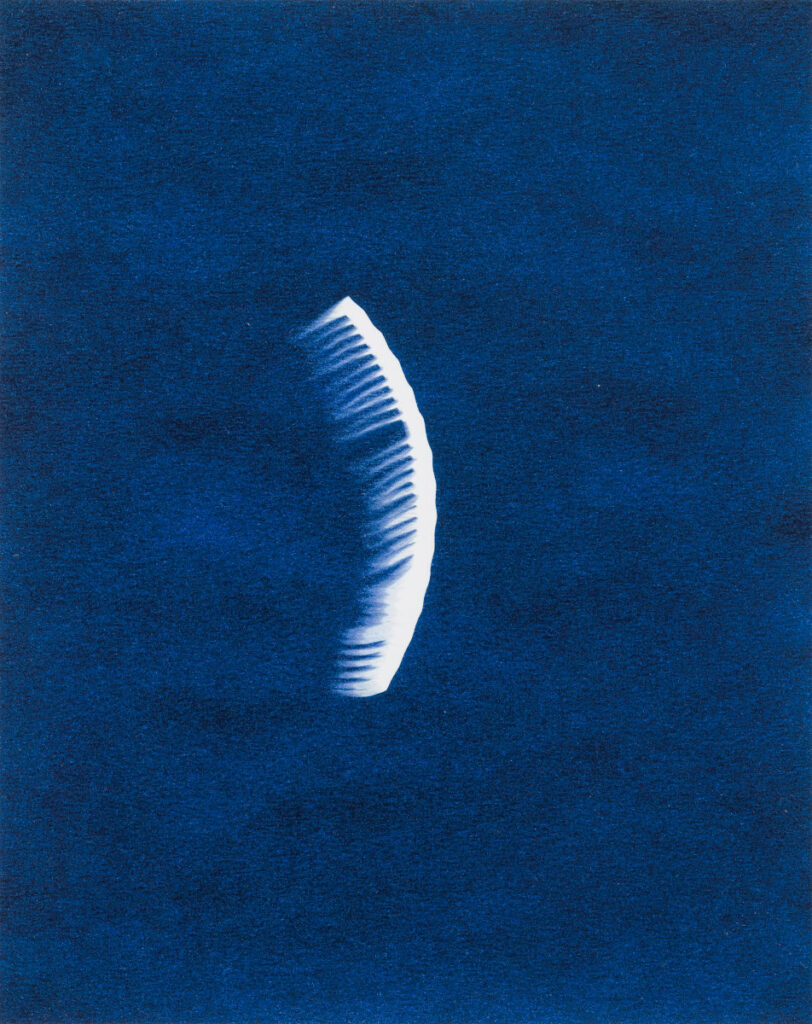
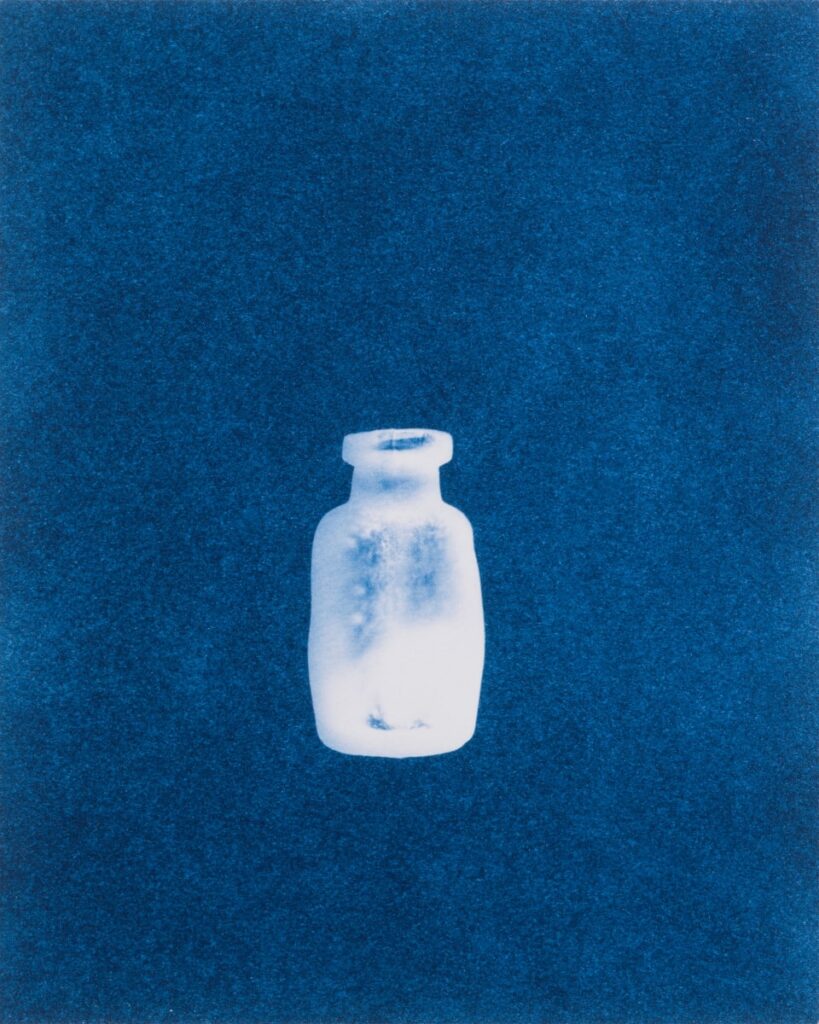
Cyanotypes are one of my favorite art techniques. I’m drawn to the almost “magical” process in which photosensitive paper turns into a deep blue under sunlight while remaining white where objects block the exposure. When I learned that we had two cyanotypes in the gallery storage, I knew I wanted to present them in the Seen in Storage event.
Although the medium was what initially captured my attention, the concept proved just as complex. The works depict two objects recovered from atomic bombings of Hiroshima—a melted bottle and a hair comb. I found it smart how Slavick draws a parallel, through the use of cyanotypes, between different forms of exposure: sunlight or atomic radiation. The fact that these objects survived the blast, while thousands of people did not, gave me the chills. – Afroditi Godi ’29
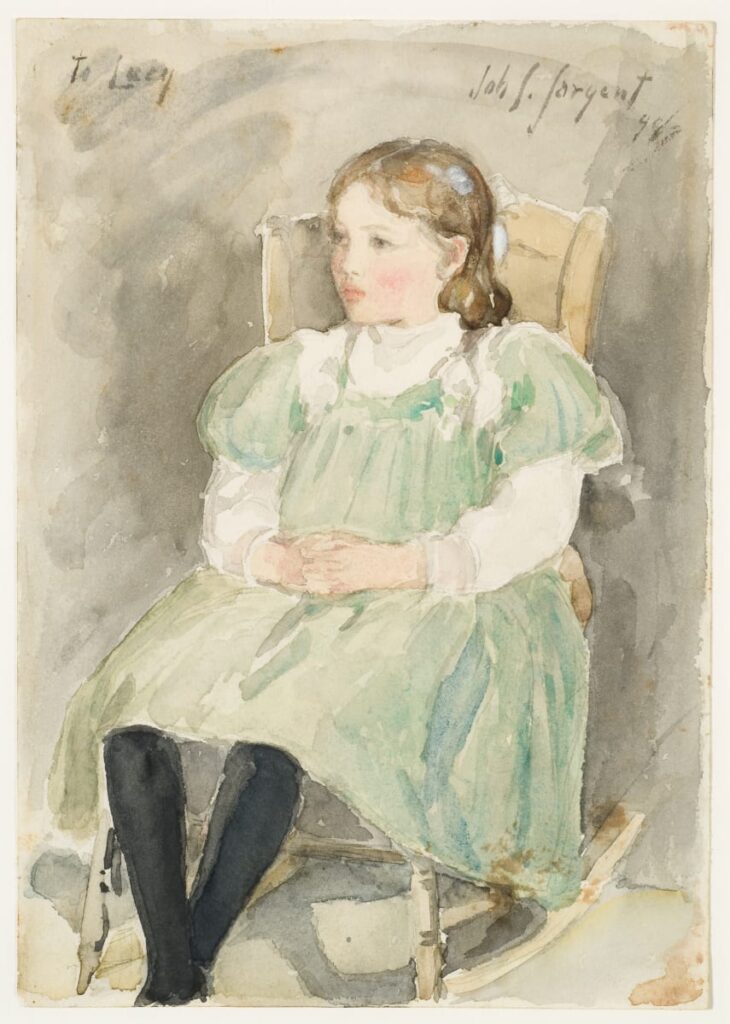
Since I saw Portrait of Young Girl for the first time, it has intrigued me. I am especially struck by the medium of this work, watercolor, because a few years ago, I visited the Isabella Stewart Gardner Museum and saw one of Sargent’s works. Portrait of a Young Girl is so profoundly different from the rest of his body of work, and Art + Apps presented the perfect opportunity for me to learn about the work and share it with my peers. – Heidi McGannon ’26
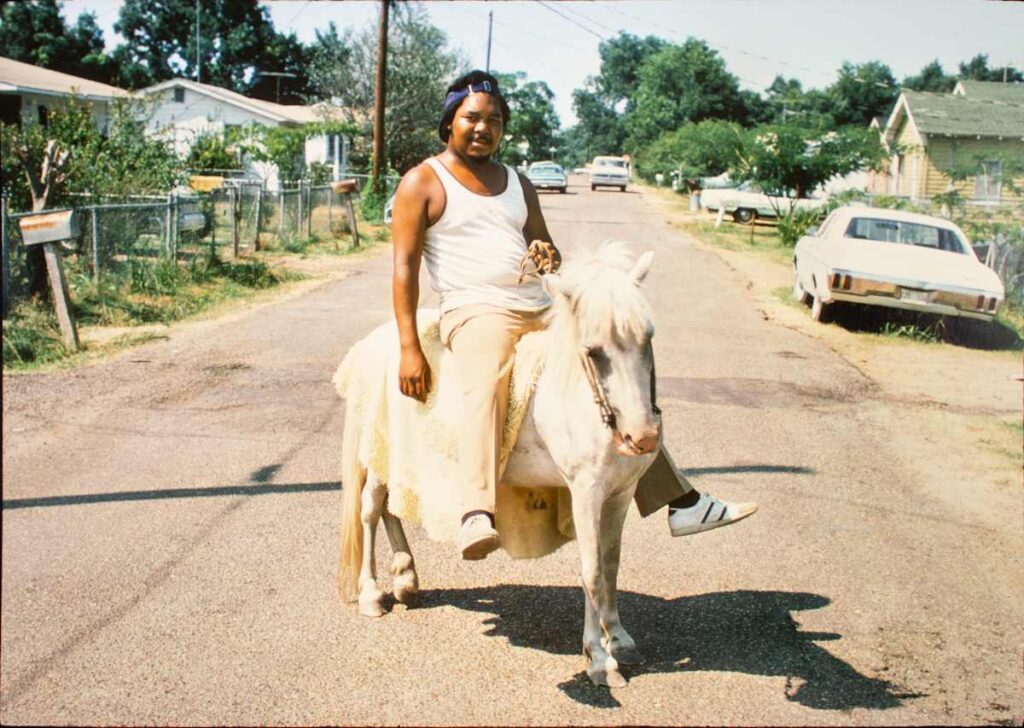
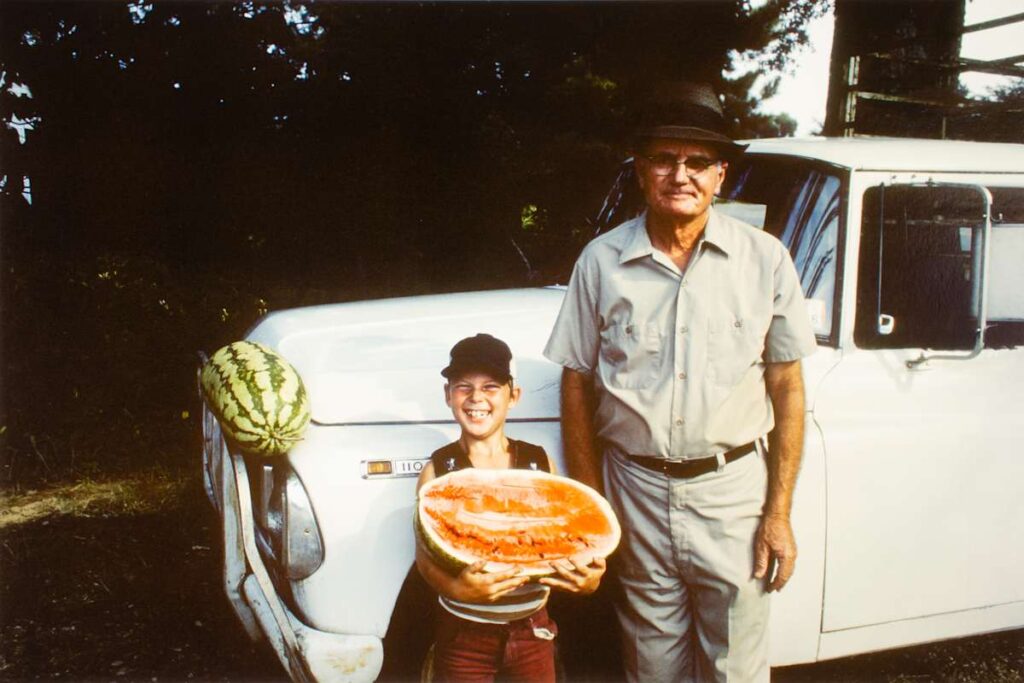
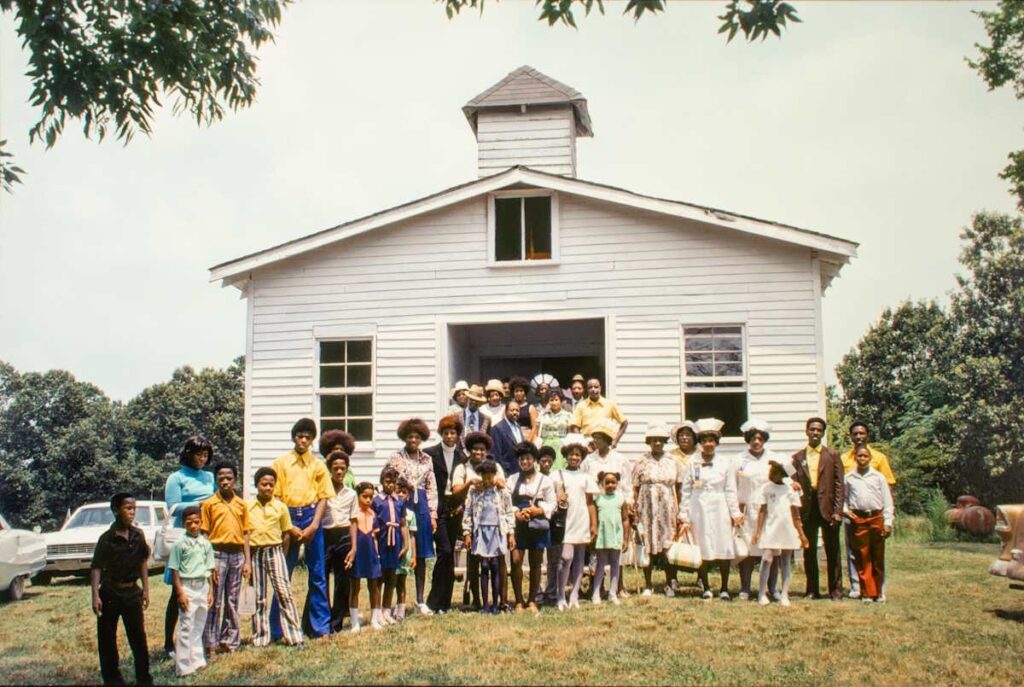
When I was growing up, I spent many a summer and Thanksgiving break in Brandon, Mississippi with my grandparents, and I loved sitting with them and hearing stories about what life was like for my dad when he was growing up. In my mind, his childhood consisted of vibrant colors and warm Mississippi sun, and Bill Ferris’ photographs somehow capture my imaginations perfectly. His works are colorful, providing a sense of joy and whimsy in a difficult time and impoverished area. He captures candid, ordinary moments in a way that makes them feel like they were your memories, which is why I wanted to highlight and celebrate his photographs for this event. – Katie Davis ’29